Lifestyle

  • Lifestyle

    Why Everyone Is Always Tired (Even When They Sleep)

    You sleep.

    Not 3 hours. Not 4.

    A full night.

    And still… you wake up tired.

    Not just a little sleepy — actually tired.
    Like your body rested, but your brain didn’t.

    And it’s not just you.

    Everyone feels like this lately.


    It’s not just about sleep anymore

    We keep treating sleep like a simple fix.

    Sleep more = feel better.

    But it doesn’t really work like that anymore.

    Because the problem isn’t always physical.

    It’s mental.


    Your brain never actually switches off

    Even when you’re “resting”, your brain is still running.

    Thinking about:

    • things you didn’t finish
    • messages you haven’t answered
    • random stuff you saw online

    It’s like having 20 tabs open at the same time — constantly.

    So you sleep… but you don’t fully reset.


    The constant input is exhausting

    From the moment you wake up:

    Phone.
    Notifications.
    Content.
    More content.

    Your brain doesn’t get quiet time anymore.

    And without quiet, there’s no real recovery.


    You’re not physically tired — you’re overloaded

    That heavy feeling?

    It’s not always lack of sleep.

    It’s:

    • too much information
    • too many small decisions
    • too many things competing for your attention

    It adds up.


    Your routine might look normal — but it isn’t

    Wake up. Check your phone.
    Scroll. Eat. Work. Scroll again.
    Sleep with your phone next to you.

    Nothing extreme.

    But no real breaks either.

    No moments where your mind just… stops.


    Sleep doesn’t fix mental exhaustion

    This is the part most people miss.

    Sleep restores your body.

    But mental overload?

    That needs something else.

    Silence.
    Less stimulation.
    Actual downtime.

    And most people aren’t getting that.


    Why it feels worse now

    Because everything is faster.

    More content. More pressure.

    Even relaxing doesn’t feel fully relaxing anymore.

    You’re still consuming something.

    Still processing something.

    Still “on”.


    What actually helps (realistically)

    Not a complete lifestyle reset.

    Just small changes:

    • less screen time before sleep
    • slower mornings (even 10 minutes)
    • doing something without a screen
    • not filling every quiet moment

    Nothing dramatic.

    Just… less noise.


    Glowssip Take

    You’re not lazy. You’re not unproductive.

    Just overstimulated.

    Sleep isn’t the problem.

    The way we live is.

    And until your mind gets actual rest,
    no amount of sleep will fully fix that tired feeling.
  • Lifestyle

    I Tried Living Like “That Girl” for 5 Days

    You’ve definitely seen her.

    Perfect morning light.
    Matching workout set.
    Lemon water in a glass that somehow looks aesthetic.
    Calm, productive, glowing… at 7AM.

    For a while, I kept telling myself it’s just content.

    But then I thought — what if I actually try it?

    Not just the vibe. The full routine.

    So I did it. For 5 days.

    And it was not what I expected.


    Day 1: It feels like you’re finally in control

    The alarm hits early and for a second you question your life choices.

    But once you get up, everything feels… weirdly satisfying.

    The quiet in the morning.
    No messages. No noise. No rush.

    I made the lemon water. Sat down. Actually had time to think.

    Then workout. Not intense, but enough to feel like I did something.

    By 9AM, I had already done more than I usually do in half a day.

    It felt good.

    Almost addictive.


    Day 2: You start noticing how much effort this actually is

    This is where the illusion starts cracking a bit.

    Because nothing about this is “effortless”.

    You have to think about:

    • what you eat
    • when you wake up
    • how you spend your time

    Everything becomes intentional.

    Which sounds nice… until you realize how much energy it takes to maintain.

    Also — being “put together” all the time is lowkey exhausting.


    Day 3: Something actually shifts

    This was the first day it didn’t feel forced.

    Waking up was still hard, but not painful.

    The routine started feeling familiar.

    And I noticed small things:

    • my skin looked more even
    • I wasn’t rushing in the morning
    • my mood was more stable

    Not dramatic. Just… better.


    Day 4: The pressure you don’t see online

    This is the part no one shows.

    Because suddenly it’s not just a routine — it’s a standard.

    If you skip something, you feel like you failed.

    If you’re tired, you still push through because “that girl wouldn’t skip”.

    And that’s when it hit me.

    This lifestyle only looks peaceful.

    It actually comes with pressure.


    Day 5: The reality check

    By the last day, I stopped trying to do it perfectly.

    No perfect breakfast. No perfectly timed routine.

    And honestly?

    That’s when it felt the most normal.

    I kept the parts that made sense and ignored the rest.

    And the experience became… sustainable.


    What surprised me the most

    Not the glow. Not the productivity.

    It was how quiet mornings change your whole day.

    When you don’t wake up in chaos, everything feels more manageable.

    That part is real.


    What didn’t feel real

    The perfection.

    Nobody wakes up every day like that.
    Nobody is that consistent, that calm, that put together 24/7.

    And if they look like they are — you’re only seeing a small part of their day.


    What I’d actually keep

    Not the aesthetic.

    Just the basics:

    • slower mornings
    • less phone first thing
    • moving a bit every day
    • simple skincare, not 10 steps

    Nothing extreme.

    Just enough to feel better.


    Glowssip Take

    The “that girl” routine isn’t fake — but it’s definitely curated.

    It works when you adapt it to your life.

    It doesn’t work when you try to copy it exactly.

    Because the real difference isn’t the routine.

    It’s how you feel while doing it.

  • Lifestyle

    Spring Makes People Feel Like Changing Their Life

    Every year it happens almost the same way.

    The light changes.
    The air feels softer.
    Days get a little longer.

    And suddenly people start thinking things like:

    Maybe I should change my routine. I should start something new.
    Maybe my life needs a reset.

    Spring has a strange psychological effect on people. It doesn’t just change the weather — it changes how we feel about our lives.


    The Light Changes Your Brain

    One of the biggest reasons spring feels like a reset is biological.

    During winter, shorter days reduce exposure to sunlight. That affects hormones connected to mood and energy — especially serotonin and melatonin.

    When spring arrives and daylight increases, the brain begins to regulate differently:

    • energy levels rise
    • motivation improves
    • mood becomes lighter

    Suddenly things that felt heavy in February start to feel possible again.

    It’s not just optimism.
    It’s chemistry.


    Winter Makes Life Smaller

    Winter naturally pushes people inward.

    More time indoors.
    More routines.
    Less movement.

    Life becomes predictable and contained. That isn’t necessarily bad — but it can create a sense of stagnation.

    By the time March arrives, many people feel like they’ve been paused for months.

    Spring removes that pause.


    The Environment Feels Alive Again

    Humans respond strongly to environmental cues.

    Green trees.
    Warmer air.
    Longer evenings.

    These signals tell the brain that activity and growth are returning.

    That’s why spring is often connected with ideas like:

    • renewal
    • transformation
    • starting fresh

    Even cultures and traditions reflect this. Many holidays and rituals around the world celebrate rebirth and new beginnings during spring.


    Motivation Feels Different in Spring

    The motivation people feel in January is usually intense but forced.

    New year goals.
    Resolutions.
    Pressure to improve.

    Spring motivation feels softer.

    It’s less about fixing yourself and more about movement. People start walking more, meeting friends outside, reorganizing spaces, trying small changes.

    It doesn’t feel like discipline.
    It feels like momentum.


    Small Changes Suddenly Feel Possible

    This is why spring often inspires lifestyle shifts.

    People start to:

    • clean their homes
    • change their routines
    • refresh their style
    • rethink priorities

    These changes aren’t always dramatic. But they create a psychological feeling of forward motion.

    And forward motion is energizing.


    Nature Is Quietly Influencing Us

    Humans are more connected to seasonal cycles than we often realize.

    In nature, spring represents growth after dormancy.

    Seeds start growing.
    Animals become more active.
    Ecosystems wake up.

    Even if we live in cities, our nervous system still responds to these patterns.

    When the world outside begins moving again, we want to move too.


    The Glowssip Take

    Spring doesn’t demand a complete life transformation.

    But it does create space for movement.

    After months of slower energy, people naturally feel ready for something new — a new routine, a new habit, sometimes even a new direction.

    Maybe that’s why spring always feels hopeful.

    Not because everything suddenly changes.

    But because for the first time in a while,
    change feels possible again.

  • Lifestyle

    We Don’t Experience Things — We Document Them

    There was a time when moments just… happened.

    Now they need angles.
    Lighting.
    A caption.
    A story.

    Before we feel something, we record it.

    And somewhere along the way, documenting replaced experiencing.


    📱 The Reflex Is Automatic

    You don’t even think about it anymore.

    Concert starts → phone up.
    Pretty plate → photo first.
    Cute café → story immediately.
    Sunset → 0.5 camera.

    The instinct isn’t “wow.”
    It’s “this will look good.”

    We’re not choosing to document.
    It’s muscle memory.


    👀 If It’s Not Posted, Did It Even Happen?

    There’s a subtle anxiety attached to unposted moments.

    If no one saw it…
    it wasn’t archived…
    it wasn’t validated…

    Did it count?

    Social media trained us to measure experience by visibility.

    The more people see it, the more real it feels.

    But that logic is backwards.


    🧠 Your Brain Is Half-There

    When you document something, part of your brain switches into observer mode.

    You’re thinking:

    • Is this flattering?
    • Should I retake it?
    • What caption fits?
    • When do I post?

    That mental split takes you out of the moment.

    You’re present physically.
    But cognitively? You’re curating.


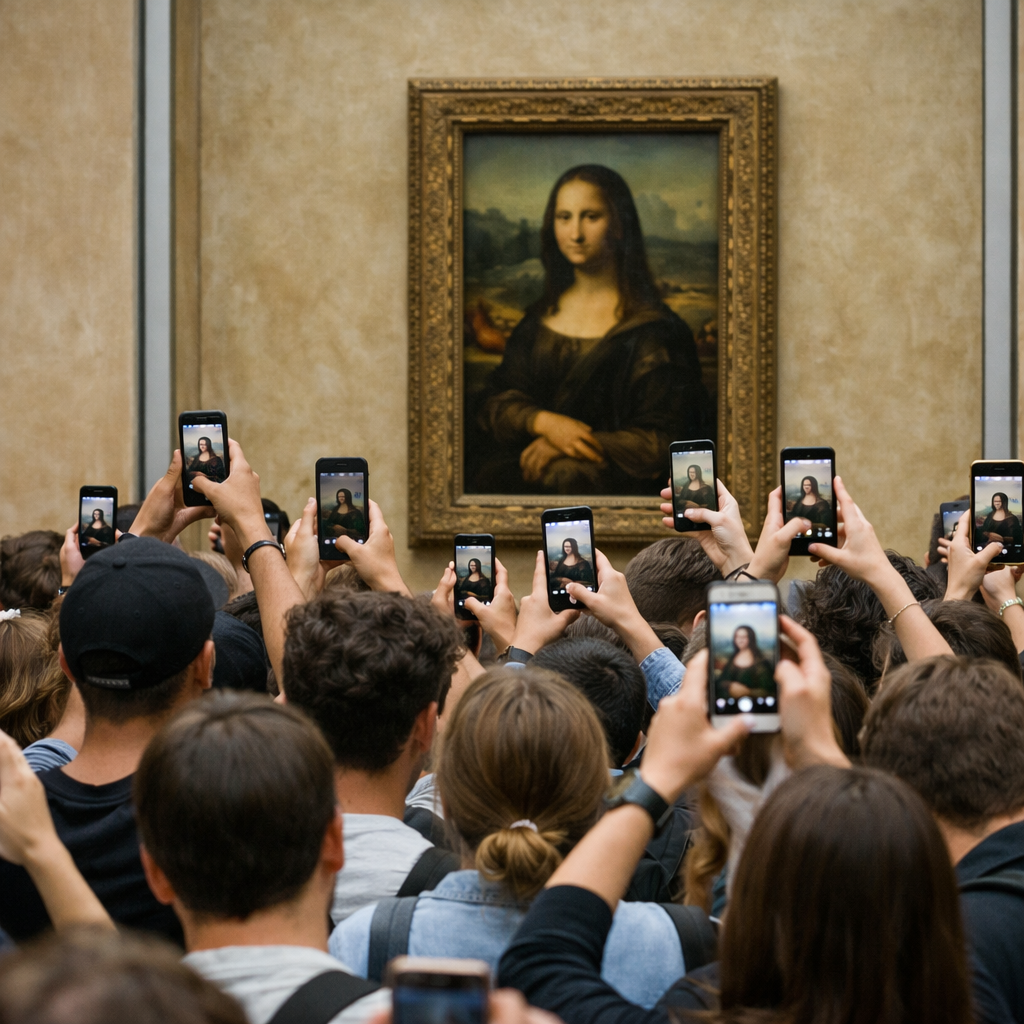
    🎤 Concerts Are the Perfect Example

    Look around at any live show.

    Hundreds of glowing screens.
    People watching through lenses.
    Recording a song they’ll never rewatch.

    We’re trying to preserve the memory
    instead of creating it.

    And ironically, studies show that constantly recording something actually weakens how deeply you remember it.

    You rely on the footage.
    Not the feeling.


    It’s About Control

    Documenting gives you control.

    You can edit the moment.
    Choose the best version.
    Delete the awkward one.

    Experiencing something fully is messier.

    It’s unpredictable.
    Unfiltered.
    Unrepeatable.

    Recording makes it safer.


    💬 The Fear of Missing Digital Proof

    There’s also social pressure.

    If you don’t post:

    • people think you weren’t invited
    • people assume you’re inactive
    • people forget you exist

    Gen Z grew up equating visibility with relevance.

    So documenting becomes survival.


    😶 But Here’s the Quiet Cost

    When everything becomes content, nothing feels sacred.

    Private joy becomes public performance.
    Real moments become assets.

    You stop asking:
    “Did I love this?”

    And start asking:
    “Did this look good?”

    That shift is subtle.
    But it changes how life feels.


    ✨ The Glowssip Take

    Documenting isn’t evil.

    It’s human. It’s fun.

    But when the camera becomes the first reaction instead of the last, something shifts.

    The most powerful moments don’t need proof.

    They don’t need filters.

    They don’t need witnesses.

    Sometimes the most rebellious thing you can do in 2026
    is leave your phone in your pocket
    and let the memory live only in you.

  • Lifestyle

    Why Calm People Feel More Powerful

    The loudest person in the room isn’t the strongest anymore.
    It’s the calm one.

    Somewhere along the way, Gen Z stopped confusing confidence with noise. Posting less. Explaining less. Reacting less.

    And somehow — that started to feel… powerful.

    Calm Is the New Flex

    Anyone can be loud, can overshare.
    Anyone can react instantly.

    Calm takes control.

    When someone doesn’t rush to reply, doesn’t panic, doesn’t need to prove a point — it shifts the dynamic. Suddenly, they’re the one setting the tone.

    Calm isn’t passive.
    It’s selective.

    Not Reacting = Having Power

    Gen Z grew up online. We’ve seen what constant reacting does to people.

    Drama ages you.
    Overexplaining weakens your point.
    Always having an opinion is exhausting.

    Calm people don’t take the bait. And that’s exactly why they win.

    Calm Feels Like Self-Trust

    There’s something intimidating about someone who’s unbothered — not fake-unbothered, but genuinely grounded.

    No panic, spiraling.
    No need to be understood by everyone.

    That energy says:
    “I know where I stand.”

    And that’s confidence without performance.

    Calm Is a Boundary

    Calm people don’t give everyone access to their emotions.

    They choose:

    • what matters
    • who matters
    • when to engage

    That boundary is what makes them feel solid. Safe. Respected.

    Why This Hits Right Now

    We’re tired.

    Tired of chaos,of reacting.
    Tired of being “on” all the time.

    Calm feels like relief. And relief feels powerful.

    The Glowssip Take

    Calm people don’t try to dominate the room.
    They don’t need to.

    They move slower. Speak less. Mean more.

    And in a world that never shuts up,
    that kind of energy hits different.

  • Lifestyle

    TikTok Made Us Romanticize Everything

    We didn’t lose touch with reality.
    We just learned how to edit it.

    Somewhere between morning routines and “POV: you’re the main character,” TikTok quietly changed the way we see our lives.
    Not louder.
    Not dramatically.
    But deeply.

    Today, life is no longer something we simply live.
    It’s something we curate.

    The Beauty of Ordinary Moments — Rebranded

    Coffee is no longer just coffee.
    It’s a ritual.

    A walk is no longer just a walk.
    It’s a moment of self-connection.

    Even silence has become aesthetic.

    TikTok taught us to notice details we used to ignore.
    But it also taught us something else:
    If a moment doesn’t look beautiful, it feels incomplete.

    The Rise of the “Main Character” Mindset

    The idea of being the main character sounds empowering.
    And in many ways, it is.

    It encourages people to romanticize small things,
    to slow down,
    to see poetry in everyday life.

    But there’s a thin line between inspiration and illusion.

    When every moment must feel cinematic,
    ordinary life starts to feel invisible.

    Living vs. Performing

    We no longer ask, “How do I feel?”
    We ask, “How would this look on TikTok?”

    Moments are filtered before they’re felt.
    Emotions are framed before they’re understood.

    Sometimes, we experience life through the eyes of an imaginary audience.

    Is Romanticizing Life a Problem?

    Not necessarily.

    Romanticizing life can be beautiful.
    It can make the ordinary feel meaningful.

    But when aesthetic becomes more important than authenticity,
    we risk losing something essential:
    the raw, unedited version of ourselves.

    The Glowssip Perspective

    TikTok didn’t just romanticize everything.
    It gave us a new lens.

    Maybe the goal isn’t to stop romanticizing life.
    Maybe it’s to remember that not every moment needs to be aesthetic to be real.

    And sometimes, the most beautiful moments
    are the ones that will never make it to your feed.

  • Lifestyle

    The Outfit That Saves the Day

    Glowssip | Lifestyle

    Let’s be honest.

    Some days don’t need motivation.
    They need a better outfit.

    You wake up tired, slightly dramatic, and emotionally attached to your bed. Your plans are questionable, your mood is unstable, and your closet suddenly feels like it belongs to someone with a completely different personality.

    And then — you find it.

    That outfit.

    The one that makes you feel like you didn’t lose control of your life… yet.


    💅 Clothes Are Basically Emotional Support

    Outfits are not just clothes.
    They’re coping mechanisms with buttons.

    A good outfit can:

    • fix your mood faster than coffee
    • make you feel like you have your life together
    • convince people you know what you’re doing

    Even when you absolutely don’t.


    The Three Types of “Day-Saving” Outfits

    1) The “Don’t Talk to Me” Fit

    Oversized blazer, sunglasses, headphones.

    Translation:
    “I’m busy, important, and not available for nonsense.”

    Perfect for days when your social battery is at 2%.


    2) The “Yes, I Tried” Look

    A bold lipstick. Cool shoes. Something slightly extra.

    You didn’t overdress.
    You curated.

    This is the outfit equivalent of saying:
    “I woke up like this. But on purpose.”


    3) The “Main Character” Outfit

    You know the one.

    The outfit that makes you walk slower, look straighter, and feel like the world is slightly obsessed with you.

    Even if it’s just your reflection.


    🧠 Why It Actually Works

    Science, but make it fashion.

    When you look good, your brain upgrades your personality.

    Suddenly:

    • you speak with confidence
    • you tolerate people better
    • you feel like the plot of your life is improving

    Outfits don’t change your life.

    They change your energy.

    And energy changes everything.


    ✨ Final Thought

    You can’t fix every day.

    But you can fix your outfit.

    And honestly?
    That’s sometimes enough.

  • Lifestyle

    Main Character Energy — But for Normal People

    Glowssip | Lifestyle

    Let’s be honest.

    Not everyone wakes up glowing, productive, and ready to conquer the world.
    Most of us wake up confused, slightly tired, and emotionally attached to coffee.

    And yet — everyone deserves a little main character energy.

    Not the dramatic, cinematic, influencer version.
    The normal one. The realistic one. The kind that fits into actual life.


    🎧 Main Character Moments Are Small, Not Grand

    Main character energy isn’t about big achievements.

    It’s about tiny, oddly specific moments:

    • walking with headphones like you’re in a music video
    • ordering your favorite coffee with zero guilt
    • choosing an outfit that feels like “you,” not trendy
    • taking the longer way home just because it feels nicer

    No audience required.


    ☕ Confidence Without Performance

    You don’t need a perfect routine to feel like the main character.

    Sometimes it’s enough to:

    • say no without overexplaining
    • leave earlier than everyone else
    • prioritize comfort over aesthetics
    • enjoy your own company without documenting it

    Main character energy isn’t loud.
    It’s calm.


    📱 Romanticizing Real Life (Without Faking It)

    You don’t need Paris sunsets or curated aesthetics.

    Real-life main character energy looks more like:

    • clean sheets on a random Tuesday
    • a playlist that matches your mood
    • sunlight hitting your room at the right moment
    • a good conversation that wasn’t planned

    Ordinary days can feel cinematic — if you notice them.


    🧠 The Shift From Impressing to Enjoying

    For a long time, being the main character meant performing for others.

    Now it means something else:

    • doing things because they feel good
    • not explaining your choices
    • not shrinking yourself to fit expectations

    You’re not a brand.
    You’re a person.

    And that’s enough.


    ✨ Final Thought

    Main character energy doesn’t come from perfection.
    It comes from permission.

    Permission to live your life without constant optimization.
    Permission to enjoy moments that don’t look impressive.

    You don’t need to be extraordinary to feel like the main character.

    You just need to be present.

  • Lifestyle

    The Comfort of People Who Feel Like Home

    Glowssip Lifestyle Column

    Some people enter your life quietly, without grand gestures or dramatic stories.
    They don’t rush in with intensity or overwhelm you with intensity.
    Instead, they bring something much rarer —
    a feeling of ease that’s almost impossible to describe.

    These are the people who feel like home.

    Not because you’ve known them forever,
    but because something about their presence makes the world softer, quieter, and more bearable.


    🌿 You Don’t Have to Perform Around Them

    With home-people, silence isn’t awkward.
    It’s peaceful.

    You don’t measure your words.
    don’t worry about being impressive.
    don’t edit your personality into a “better” version.

    You simply exist.
    And that’s enough.

    They make space for the unpolished parts of you — not just the curated ones.


    Your Nervous System Recognizes Them Before Your Mind Does

    There’s a specific calm that appears only around certain people.
    Your shoulders relax.
    breathing slows.
    thoughts stop racing.

    It has nothing to do with romance and everything to do with safety.

    Being around them feels like returning to a familiar rhythm you didn’t even know you missed.


    Conversations Flow Without Forcing Anything

    Some connections spark from chemistry.
    Others spark from chaos.

    But the ones that feel like home?
    They spark from ease.

    The conversation doesn’t try too hard.
    It’s not a performance or a competition.
    It’s warm, balanced, steady — like a slow cup of something comforting.

    You leave feeling fuller, not drained.


    🌙 They Don’t Demand Energy — They Restore It

    There are people who take energy without meaning to.
    And then there are the rare few who give it back effortlessly.

    You can spend a whole day with them and still feel like yourself.
    No pressure.
    emotional labor, pretending.

    Just quiet togetherness that fills your lungs the way deep breaths do.


    💫 They Make Life Feel Less Complicated

    Not because they fix your problems,
    but because they soften the edges.

    You navigate things differently when someone stable is near,trust yourself more, worry less.
    You see the world with gentler eyes.

    Home-people don’t solve life —
    they make it feel livable.


    Final Thought

    In a world full of temporary interactions and loud personalities,
    the people who feel like home are rare.

    They’re the ones you don’t have to chase.
    The ones who don’t drain you.
    The ones whose presence feels like exhaling.

    Keep them close.
    Connections like that don’t happen often —
    and they don’t need fireworks to be unforgettable.

  • Lifestyle

    The Beauty of Doing Absolutely Nothing (Without Feeling Guilty)

    Glowssip Lifestyle Column

    There’s a special kind of peace that appears only when you stop.
    Not when you rest with a purpose, not when you’re trying to recharge — but when you allow yourself a moment with no goal at all.

    Doing nothing sounds simple.
    Yet it’s one of the hardest things for people to do without feeling irresponsible or behind.

    But here’s the truth:
    Moments of stillness aren’t wasted. They’re necessary.


    🌿 Your mind works better when it isn’t performing

    Most of the day, your attention is pulled in five directions at once.
    When you pause — truly pause — the mind settles.
    Thoughts separate.
    Noise fades.
    Clarity appears in small, quiet pieces.

    It’s not productivity.
    It’s balance.


    Nothing doesn’t have to look dramatic

    It can be sitting on the floor for five minutes.
    Staring out the window.
    Lying on your bed with no phone.
    Drinking something warm without multitasking.

    Tiny acts of stillness feel small, but they reset your entire system.


    🍃 Guilt is the real reason people avoid rest

    We associate “doing nothing” with laziness because we’ve been conditioned to measure every minute.

    If it isn’t useful, it feels wrong.
    If it doesn’t move you forward, it feels like falling behind.

    But real rest isn’t a reward — it’s maintenance.
    The same way sleep is maintenance.
    The same way breathing is.

    You don’t earn it.
    You need it.


    Nothing creates space for better things

    When your mind isn’t crowded, decisions get easier.
    Emotions get clearer.
    Small joys become visible again.

    You notice the way sunlight falls on the table.
    taste your drink instead of swallowing it fast.
    hear your own thoughts without pressure or judgment.

    Doing nothing reconnects you with the simple parts of being alive.


    🌙 Final Thought

    A quiet moment is not a step back.
    It’s a moment that holds you in place long enough to feel grounded again.

    You don’t have to justify it.
    You don’t have to turn it into a routine.

    Sometimes the healthiest choice is the one that looks like you’re doing absolutely nothing at all.